Tinos, and the village of Kardiani
An island with a French thread
In Loutra, twenty minutes from here, stands the Ursuline convent. It was a Franco-Greek school for girls from all over Greece, from 1862 to 1984, founded by French nuns. Today much of the building is a museum: the workrooms, the pharmacy, the pupils’ registers, everything has been left in place.
In the village of Kardiani there are two churches, one Orthodox and one Catholic. The village is split in two and lives on good terms — and has done for centuries.
It is not only history. Families here still send their children to French schools. On Tinos you will hear French more often than on most Greek islands.
How I came to be here
In 1999, when the Athens stock exchange looked as though it would never stop, I decided to take a share of it out and buy land on an island near Athens, to build a house for my large family.
I could easily have bought on Mykonos — it was already the fashionable place. As luck had it, I stopped at Tinos first, the handmade island, and fell in love with it at first sight.
More than twenty-five years on, I still find something new every time I come. I have never grown tired of it. You won’t have time to see all of it — nobody does. So here is what I recommend.
Kardiani
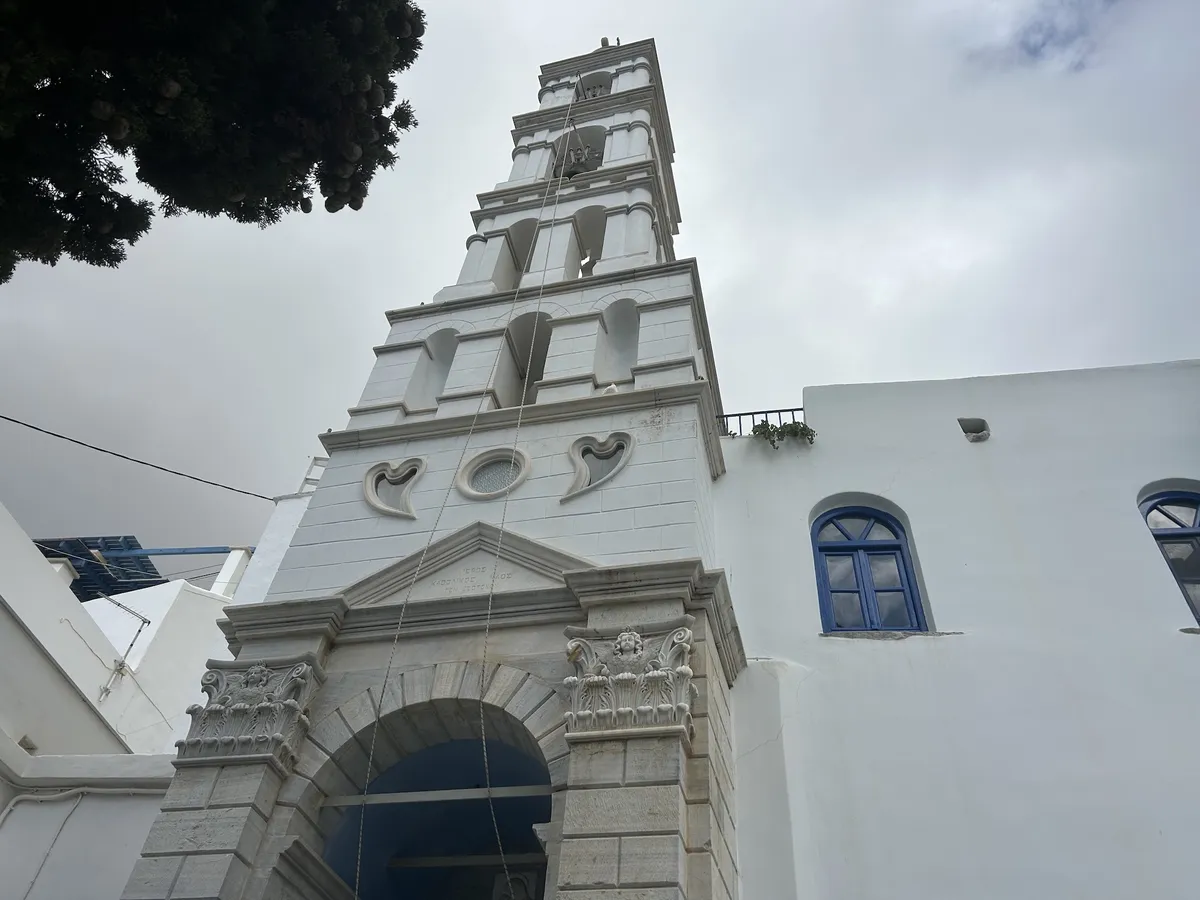
To my mind, the village of Kardiani is the finest balcony in the Aegean. Marble fountains running all year, tall plane trees, cobbled lanes, whitewashed houses, and the bay below.
The village’s two communities always celebrate Easter together. It is worth experiencing once in a lifetime. On the square, on Easter Monday, the party starts early and runs until dawn: live music, dancing, tables of food, raki, wine and beer, for a symbolic contribution.
In the village, sit at Dimitra’s kafeneio for a coffee or a beer and try her pies. For a proper meal in the shade of the trees with a view over the Aegean: “To Perivoli tis Kardianis”.
« "The view is absolutely magnificent! It is rare to see so much sea and sky. [...] The village of Kardiani is, without doubt, one of the most beautiful on the island, if not in the Cyclades."»
Maud — Paris, France · August 2018
Our beaches
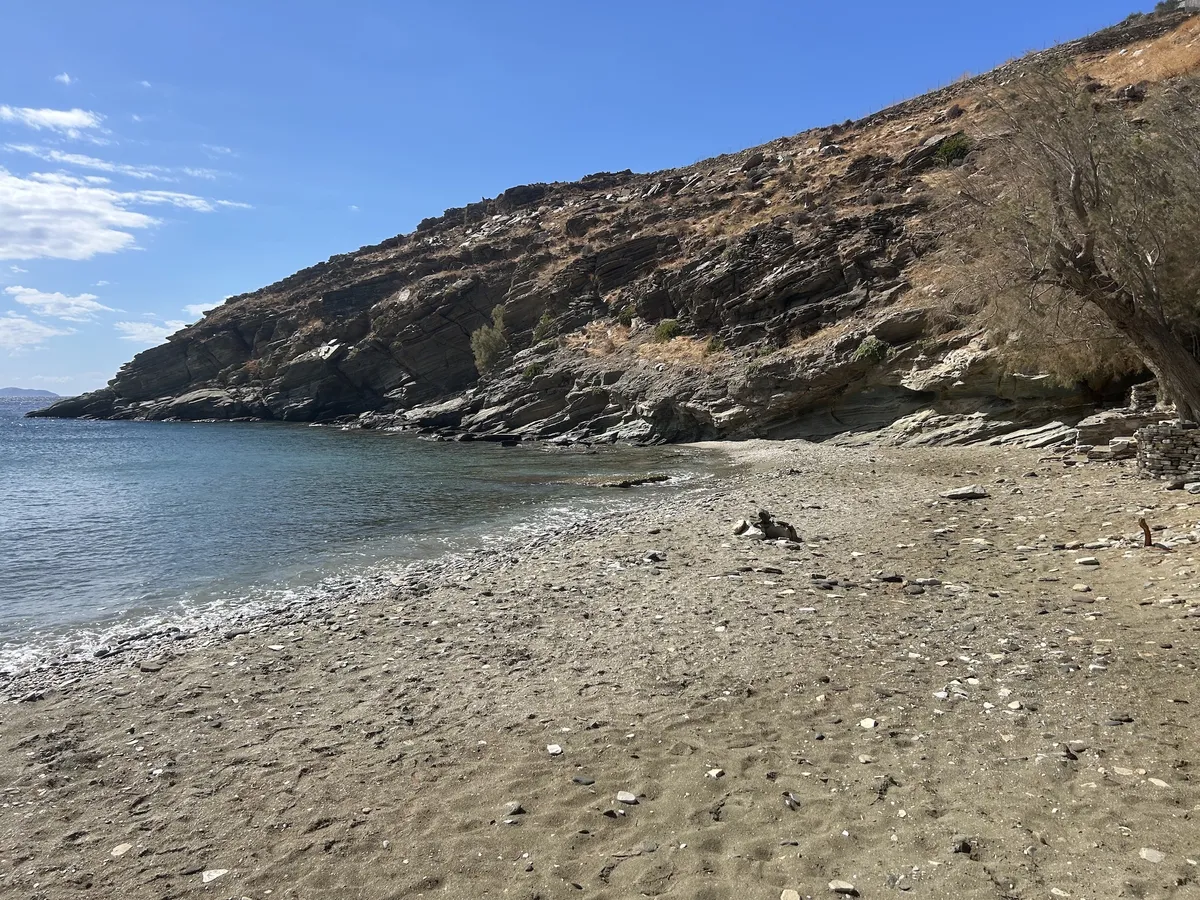
Kalivia is seven hundred metres from the house. We call it our courtyard.
Tinos is windy, and the wind is almost always northerly: it is a wind that cools. That is why August here stays bearable. It also means you learn where to sit. At Kalivia, the right-hand side by the rocks is sheltered — the sea there is as calm as a pool, while the waves break a little further along. Even in August, when I go down to swim at ten in the morning, the whole beach feels like your own. It fills up in the afternoon.
There is a beach bar that respects the landscape rather than covering it, serving cold beer, cocktails, coffee and finger food.
In the next cove, Giannaki Bay, perched on the rocks, is the restaurant “O Dinos”. They welcome you with a complimentary kakavia. Everyone’s favourite dish is the spaghetti with prawns and peppers; the fish, when there is fish, is always fresh; and grilled octopus is my own meze. In August you need a reservation. Tell me a few days ahead and I will book a table in your name myself.
A little further
Kolymbithra — older children can take surf lessons.
Rochari and Apothikes — for a walk and a swim.
Livada — wilder, with a wetland beside it and wild goats on the sand. The water deepens sharply; swim only in good weather.
Apigania — one of my favourites, but it takes a walk and there is no shade at all.
Pachia Ammos — where my children asked to go when they were small, for the dunes.
The Villages
Tinos has fifty villages and no two are alike.
Pyrgos — an open-air museum of marble; every house is a piece of work. Have a coffee and a galaktoboureko under the ancient plane tree. Visit the Yannoulis Chalepas Museum and the Museum of Marble Crafts, where children can watch stone being worked. This is also home to the Preparatory and Vocational School of Fine Arts of Panormos — a state school founded in 1955, teaching marble craft in a way it describes as unique in the world.
Panormos — two kilometres below. My favourite taverna for fresh fish is “Maistros”.
Ysternia — on the village beach is “Thalassaki”, where the cooking is an art form. Boats come from Mykonos just to eat there.
Volax — a lunar landscape. Children love climbing the huge rounded granite boulders.
Loutra — the Ursuline museum and the Jesuit monastery.
Komi — all the island’s vegetables come from here.
Kampos — for the Tsoclis Museum.
Dyo Choria — the square is a stage set in itself.
And also Agapi and Triantaros.
Where I eat, in Chora, the town of Tinos
I Agkyra — seafood, good quality and fair prices.
O Tarsanas — a classic.
To Koutouki tis Elenis — excellent Greek cooking.
Marathia — the island’s fine dining.
Drosia, in Ktikados — a traditional kafeneio serving home cooking, in a beautiful courtyard in summer and inside the old café in winter.
Tinos is a food destination: exceptional raw ingredients and a zero-miles habit. I could list twenty more places, but the best corners you will find for yourselves.
“Away from the buzz of crowded spots, you have everything you need at a walking distance: beaches, tavernas and even multiple hiking paths to reach bays or the very nice village of Kardiani. We were a family with young kids, so being in an area preserved from massive tourism, with a very charming location and tavernas closeby was a perfect mix.”
Julien — Saint-Ismier, France · August 2018
My own suppliers
Seasonal vegetables at the market near the port. Eggs at the greengrocer “Divolo”. Bread at “Manelas”. Meat, louza and sausages at “Boras”. Honey at the House of Honey in Pyrgos. Traditional sweets at “Chalaris”. Ice cream at “Mesklies”. And at the cooperative shop, every local cheese — aged graviera, kariki, tyrokafteri, volaki, the little round cheese, fresh butter — along with rare local wines.
The Panagia and Kionia
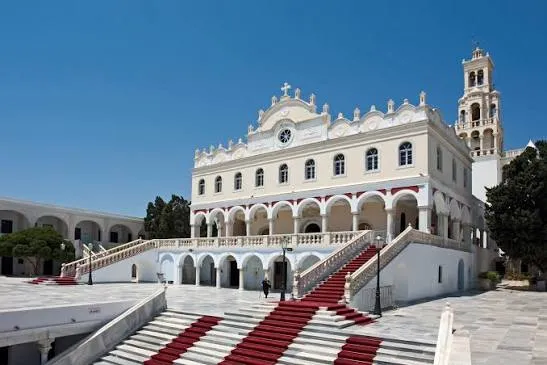
Tinos has been a place of pilgrimage since antiquity. At Kionia stands the sanctuary of Poseidon and Amphitrite, where travellers broke their journey on the way to Delos.
Today it is one of the largest pilgrimage destinations in the Orthodox world, because of the miraculous icon of the Virgin. On 15 August there is a great feast — but you can visit and light a candle on any day of the year, at any hour.
Book direct
Booking direct costs around 15% less than booking through Airbnb, Vrbo and Holidu.
Send me your dates, and I’ll reply within 24 hours.
©2026 Kardiani Bay. All Rights Reserved
MHTE: 1178K92001077001